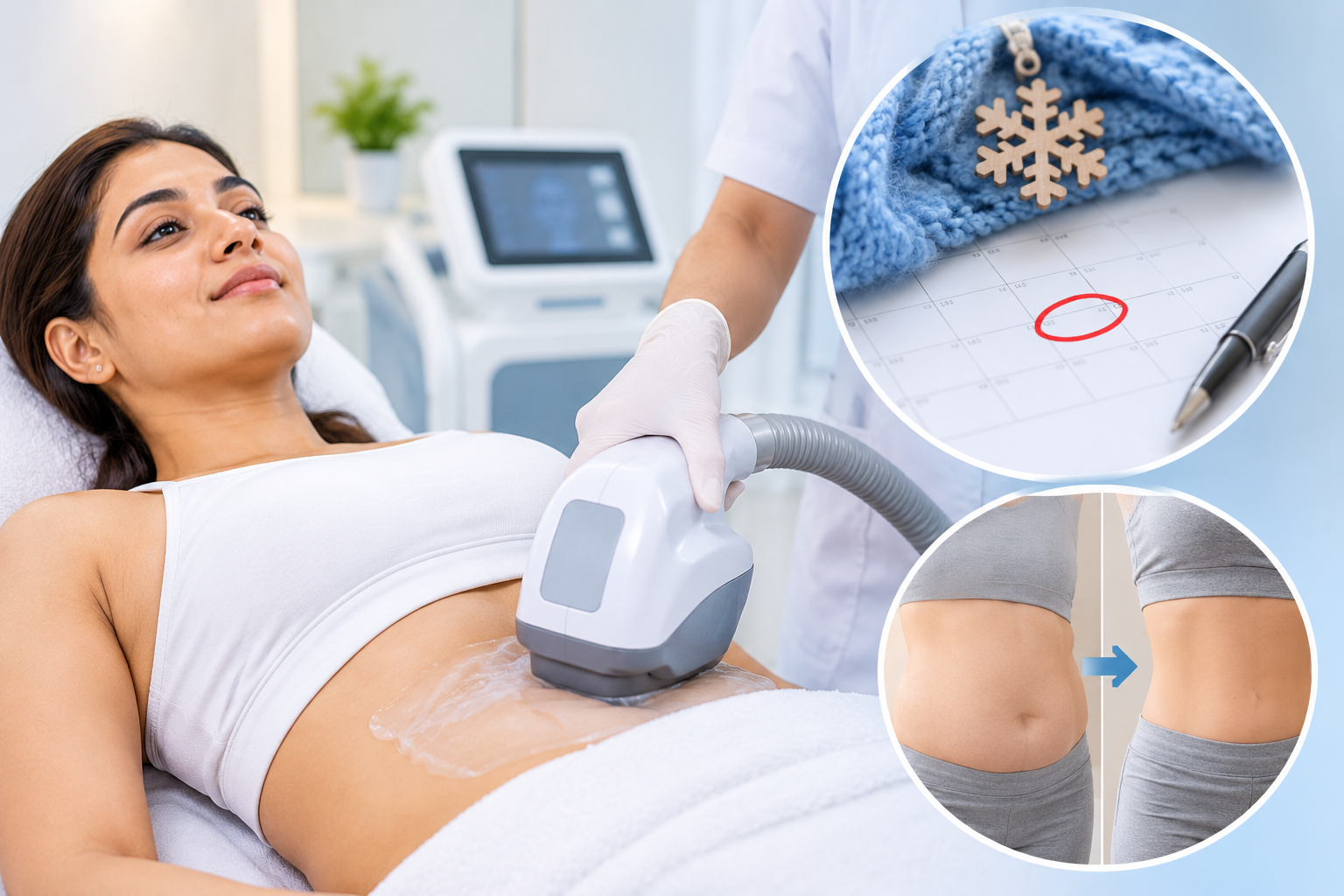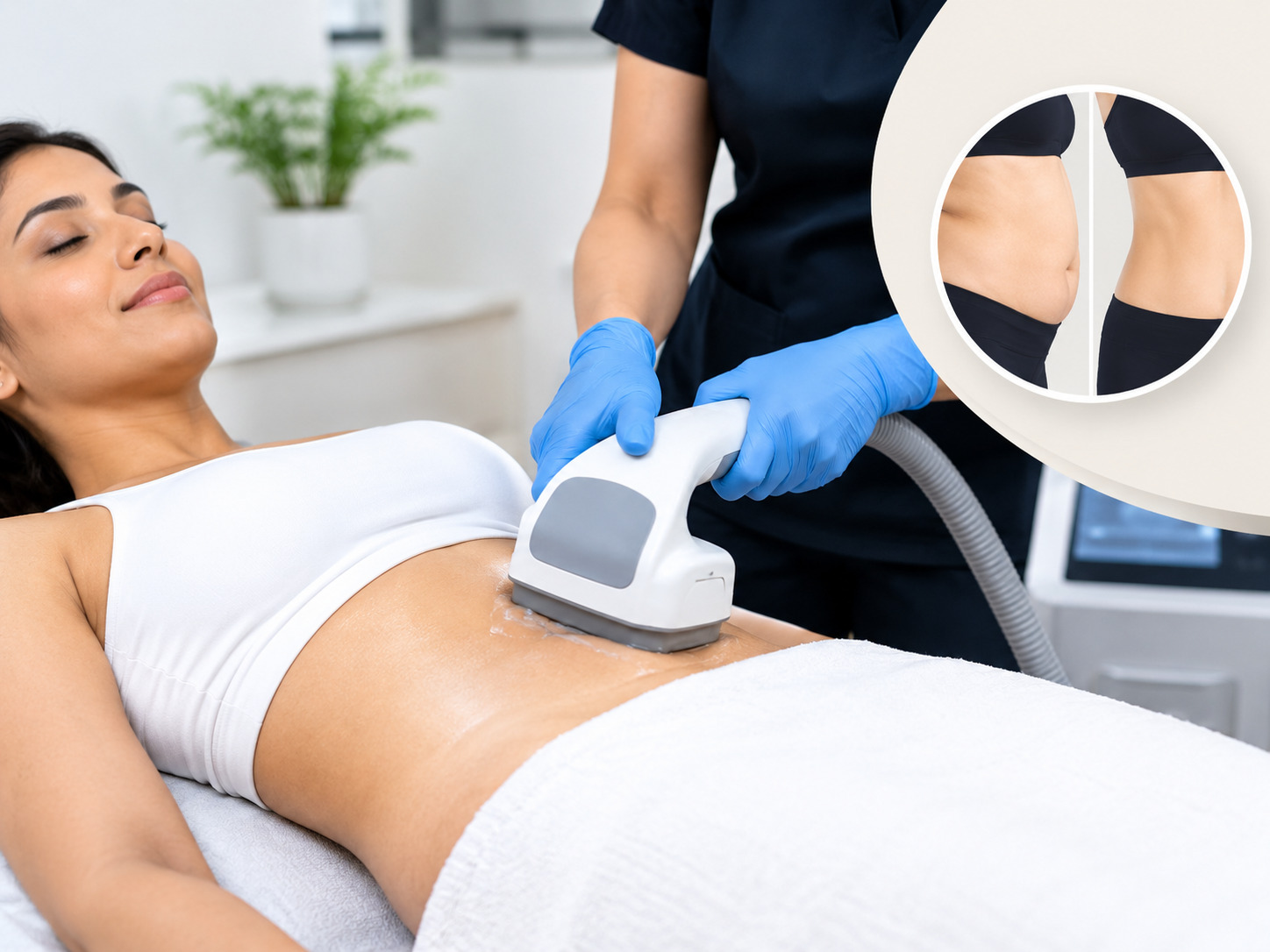
Yes, RF or HIFU safe for Indian skin is a fair expectation when the treatment is done with the right settings by a trained professional. Neither treatment targets pigment, so the main risk is pigmentation caused by too much heat, which is uncommon and usually temporary. The clinic and the technique matter far more than the device name.
Here is what actually causes pigmentation, who is at higher risk, and how to protect your skin.
Why Indian Skin Needs Extra Care
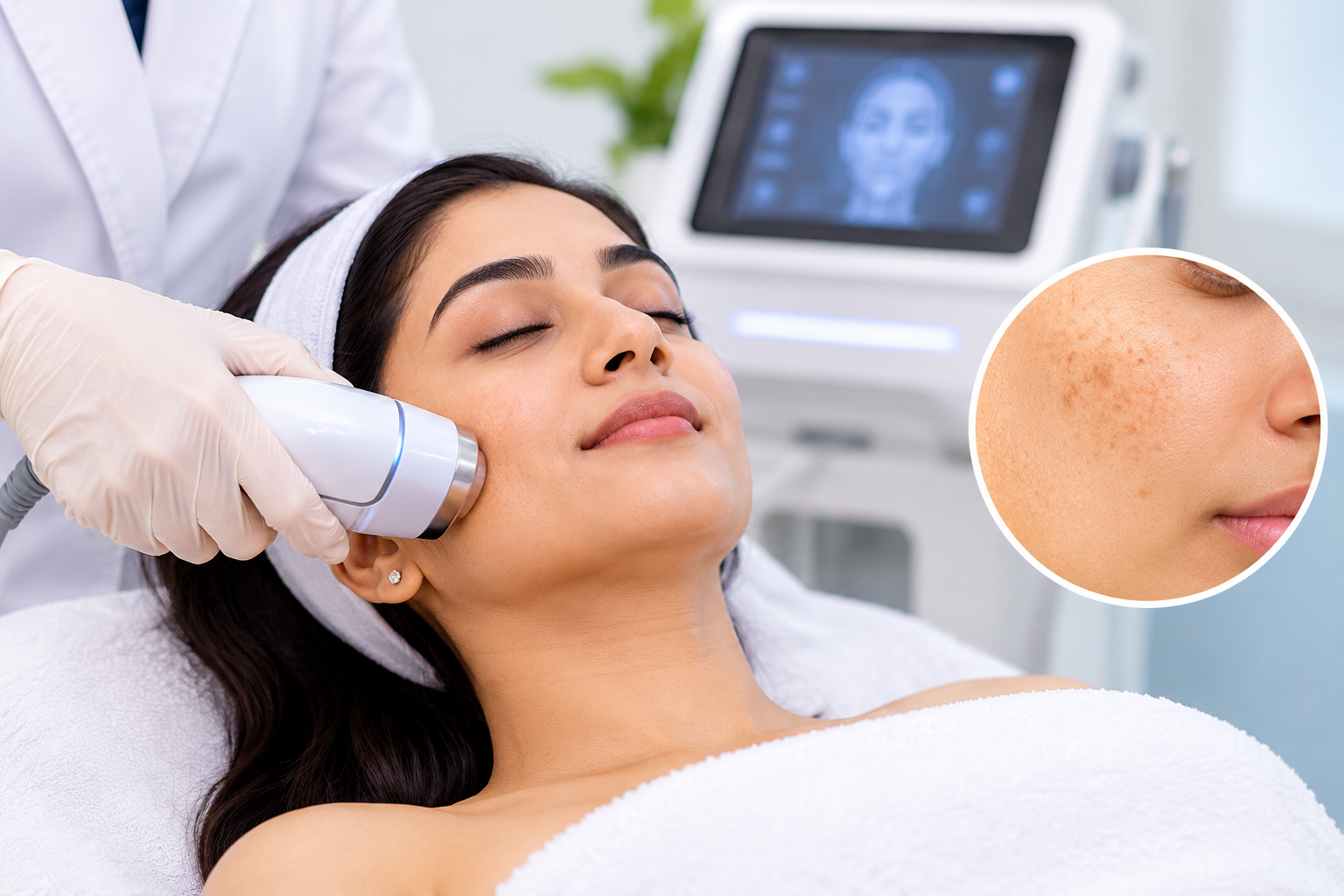
Most Indian skin falls between Fitzpatrick types III and V. Dermatologists use this scale to describe how skin reacts to sun and heat.
- Skin with more melanin has pigment cells that react quickly to irritation.
- Even mild inflammation can leave a dark mark. This is called post-inflammatory hyperpigmentation (PIH).
- The mark is usually temporary, but it can take weeks or months to fade.
This does not make you a poor candidate. It means energy settings, cooling and aftercare need more attention than they would on lighter skin.
Is RF Safe for Indian Skin?
Generally yes. A 2023 systematic review in Dermatologic Surgery looked at RF and RF microneedling in Fitzpatrick types III to VI. It concluded that the risk of scarring or lasting pigmentation is low. Some studies reported temporary darkening that resolved on its own.
If you are comparing options, our radio frequency for skin tightening in Indore is delivered as a gradual course, so each session stays gentle and we can watch how your skin responds.
Why RF tends to be well tolerated:
- It heats the deeper layers instead of attacking surface pigment.
- Surface cooling and controlled temperature protect the top layer.
- Lower energy over more sessions is gentler than one aggressive session.
Is HIFU Safe for Indian Skin?
Also generally yes, with a few conditions. HIFU focuses ultrasound energy at a set depth below the skin, so the surface and its pigment cells are largely bypassed. Dermatology reviews describe both HIFU and RF as having a favourable safety profile in darker skin.
When people ask about HIFU for skin tightening, the key risks are about technique, not skin colour:
- Energy set too high for your skin thickness
- Wrong depth for the area being treated
- Overlapping passes that overheat one spot
- Poor contact or cooling
Done right, side effects are mild, such as temporary redness or tenderness. Our body HIFU service page explains what a session involves.
RF vs HIFU: Which Carries More Pigmentation Risk?
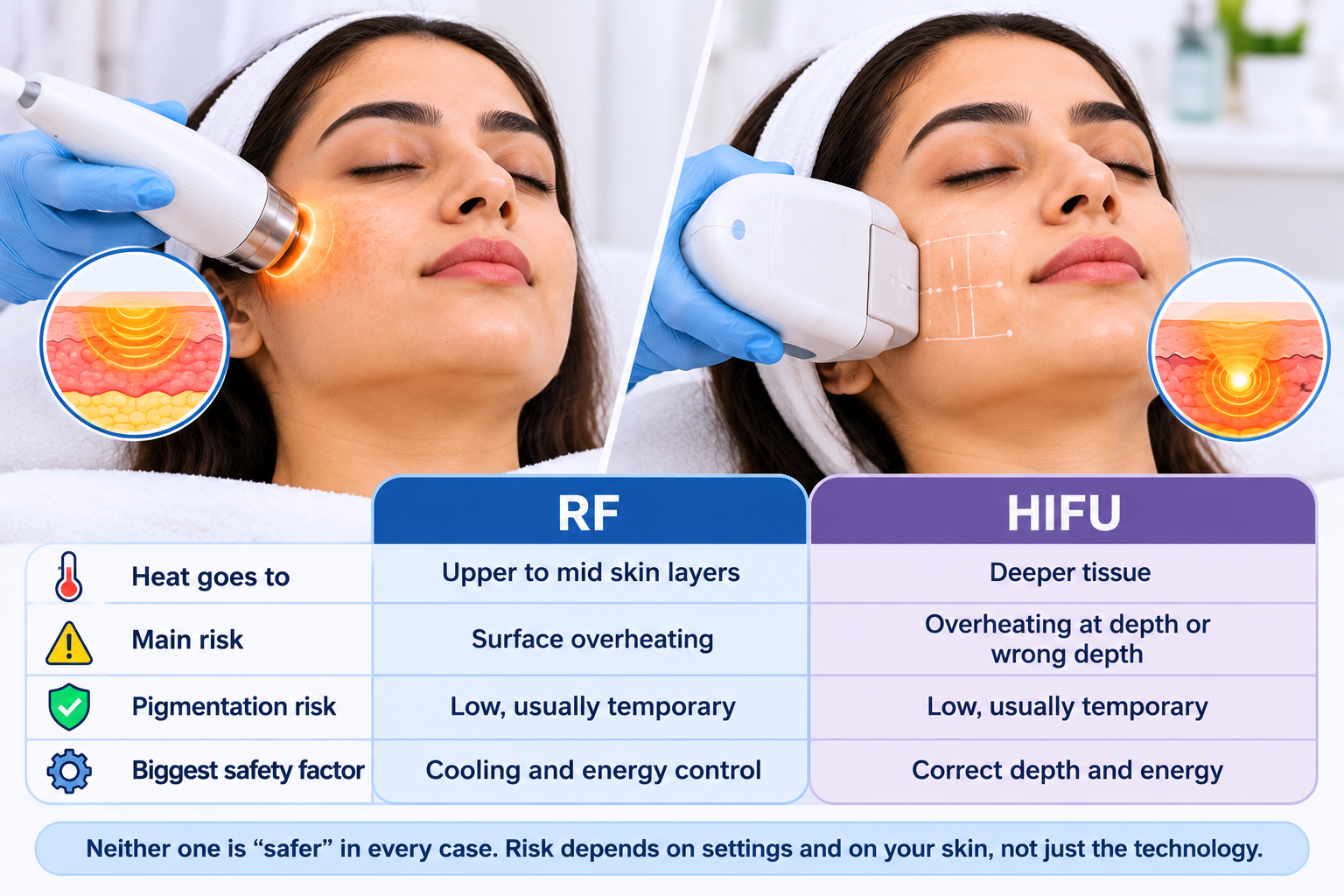
| RF | HIFU | |
| Heat goes to | Upper to mid skin layers | Deeper tissue |
| Main risk | Surface overheating | Overheating at depth or wrong depth |
| Pigmentation risk | Low, usually temporary | Low, usually temporary |
| Biggest safety factor | Cooling and energy control | Correct depth and energy |
Neither one is “safer” in every case. Risk depends on settings and on your skin, not just the technology.
Not sure which one your skin can handle? A short skin assessment tells you before anything is switched on.
Who Should Be More Careful?
Tell your specialist first if you have any of these:
- Melasma or patchy pigmentation. Heat can trigger or worsen it, so these cases need a cautious plan.
- A recent tan or sunburn. Tanned skin is more reactive, so wait until it fades.
- Recent peels, lasers, or strong actives such as retinoids, which sensitise skin
- Active acne or an infection in the treatment area
- A tendency to form dark marks after pimples or scratches
- Pregnancy, a pacemaker, or a metal implant near the area
None of these automatically rule you out. They change the plan.
Warning Signs to Watch For
Most reactions are minor. Contact your clinic if you notice:
- A spot that feels much hotter or more painful than the rest
- Blistering or a raised, shiny patch
- Grey, brown or dark patches appearing in the days after
- Redness that increases instead of fading within a day or two
Early advice helps. Pigmentation that is caught early usually responds well to simple care.
6 Ways to Protect Your Skin
- Avoid sun for 1 to 2 weeks before. Tanned skin takes heat poorly.
- Pause strong actives if your specialist asks, such as retinoids and acids.
- Choose a clinic that assesses first. A proper check includes skin tone, history and sun exposure.
- Ask about settings and cooling. A good clinician explains the plan simply.
- Use SPF 30 or higher daily after treatment. Sun is the biggest trigger for dark marks.
- Skip hot showers, saunas, and heavy exercise for the first day.
What to Ask Before You Book
If you are looking at an RF skin tightening clinic in Indore or any clinic offering HIFU, ask:
- Have you treated skin tones like mine?
- Will you assess my skin and test a small area first?
- How do you adjust energy for my skin type?
- What happens if I get a reaction?
A confident, transparent answer is a good sign. Avoid anyone who says “no risk at all” or pushes a package before looking at your skin.
Under the Chin and Jawline
HIFU is also used for firming the lower face. If your concern is a soft jawline or fullness under the chin, our guide to Double Chin Removal Treatment in Indore explains how double chin treatment works and its benefits, including which cases suit heat-based tightening and which need fat reduction.
Frequently Asked Questions
1. Is HIFU safe for dark skin?
Yes, when settings and depth are chosen correctly. HIFU works below the surface, so it usually spares pigment cells, but over-heating can still cause temporary dark marks.
2. Can RF cause pigmentation?
It can in rare cases, usually from too much heat or poor cooling. Research in skin of colour shows the risk is low and the darkening is mostly temporary.
3. Which is safer for Indian skin, RF or HIFU?
Neither is always safer. Both have a low pigmentation risk with proper technique. Your skin type, concerns and the clinician’s experience decide the better fit.
4. Can I have RF or HIFU if I have melasma?
Possibly, but heat can worsen melasma, so a cautious plan is needed and you should get a skin assessment first. Some people are advised to treat the melasma before tightening.
5. How long does pigmentation last if it happens?
Mild post-inflammatory marks usually fade over weeks to a few months with sun protection. Report it early so it can be managed.
6. Is there downtime?
No real downtime for either treatment. Mild redness or warmth may last a few hours.
7. How do I find the best skin tightening in Indore?
Look for a clinic that assesses your skin first, explains risks honestly and matches the treatment to your concern. The best skin tightening in Indore is the one that suits your skin, not the one with the biggest promise.
The Bottom Line
RF and HIFU are generally safe for Indian skin. Pigmentation is the main risk, and it is mostly preventable with correct settings, sun care and a clinic that knows what it is doing.
At The Body Theory Company, we start with your skin, not a package, and we tell you plainly if a treatment is not right for you.
Want skin tightening you can feel confident about? Book a free consultation, get a clear safety plan and ask every question you have.