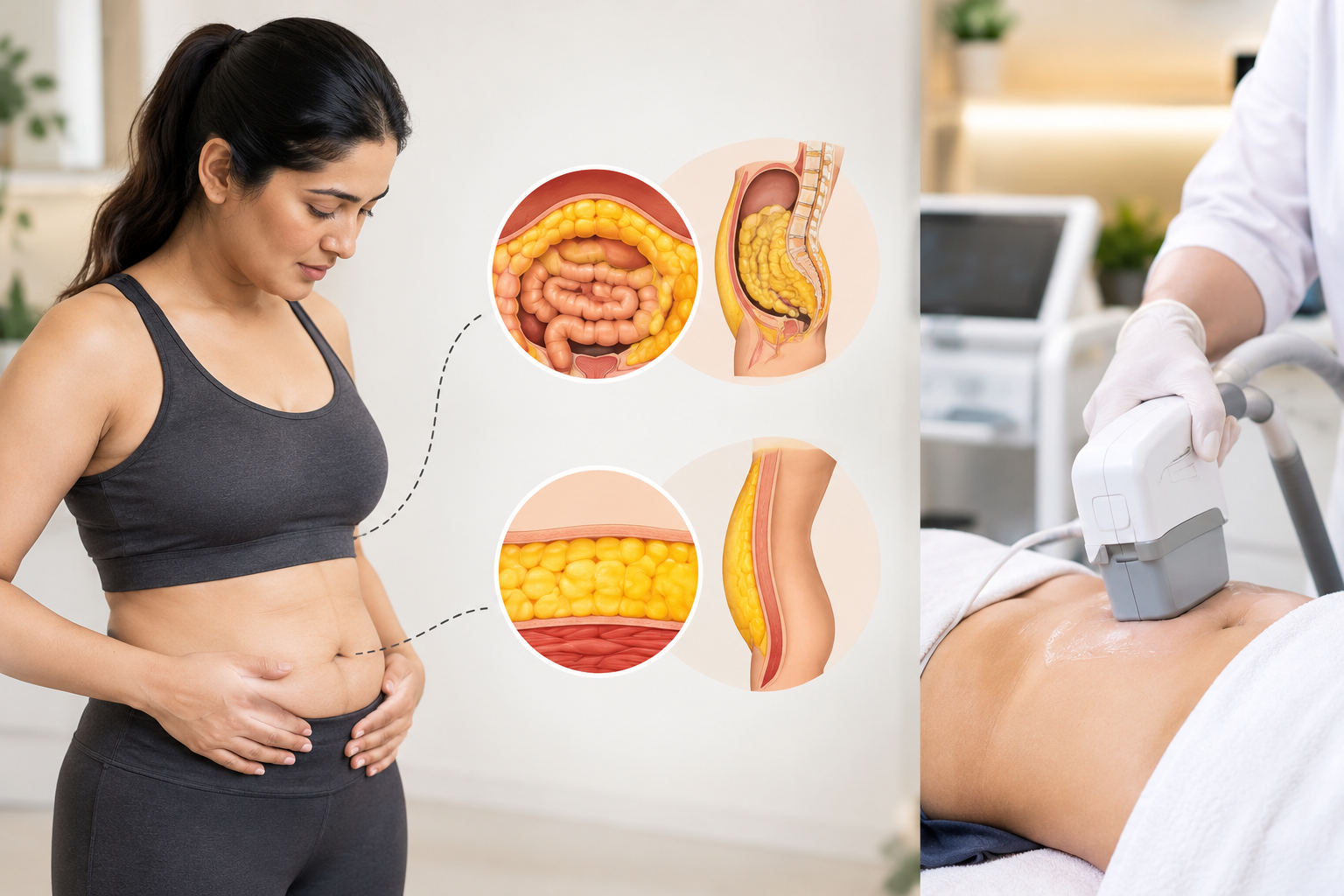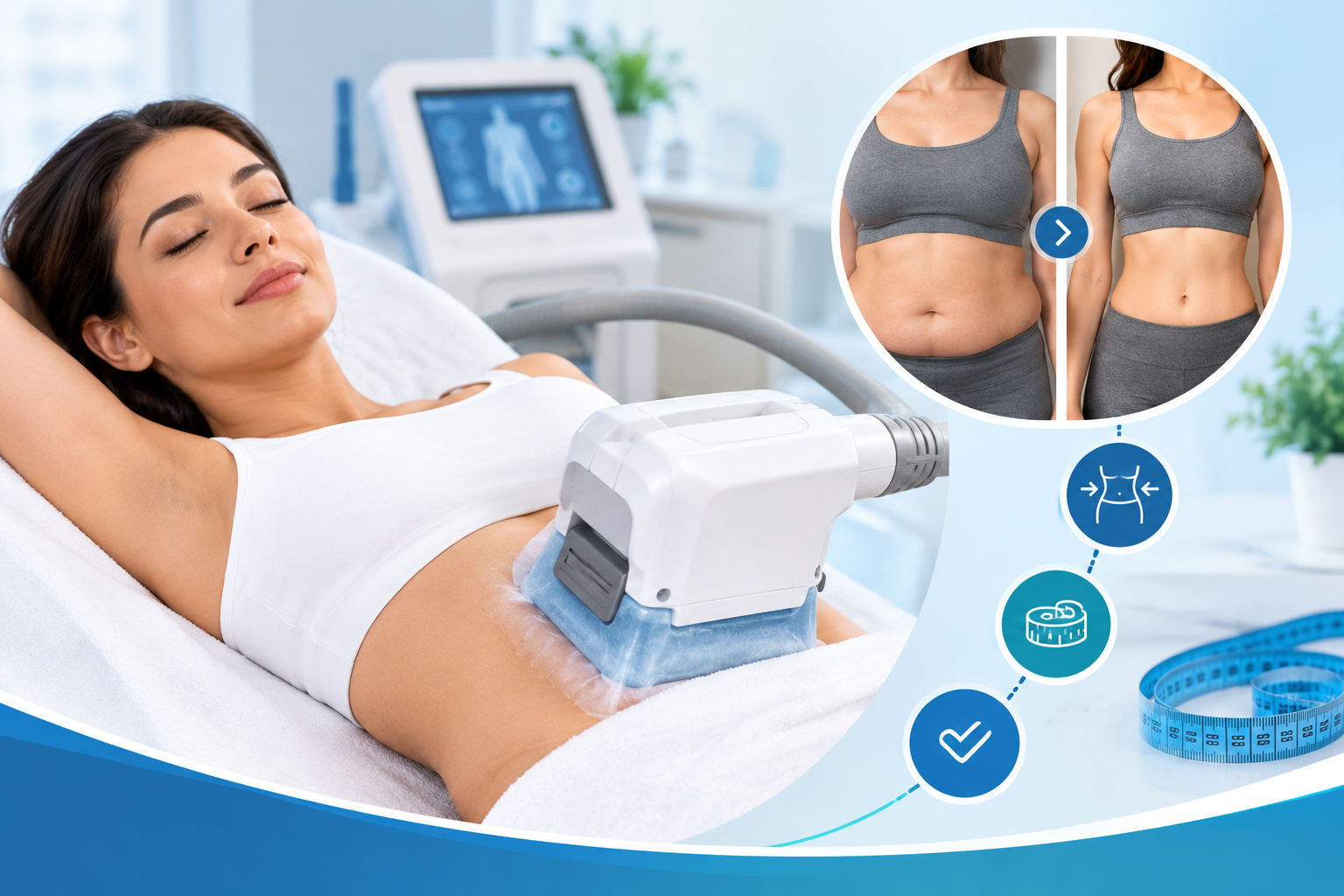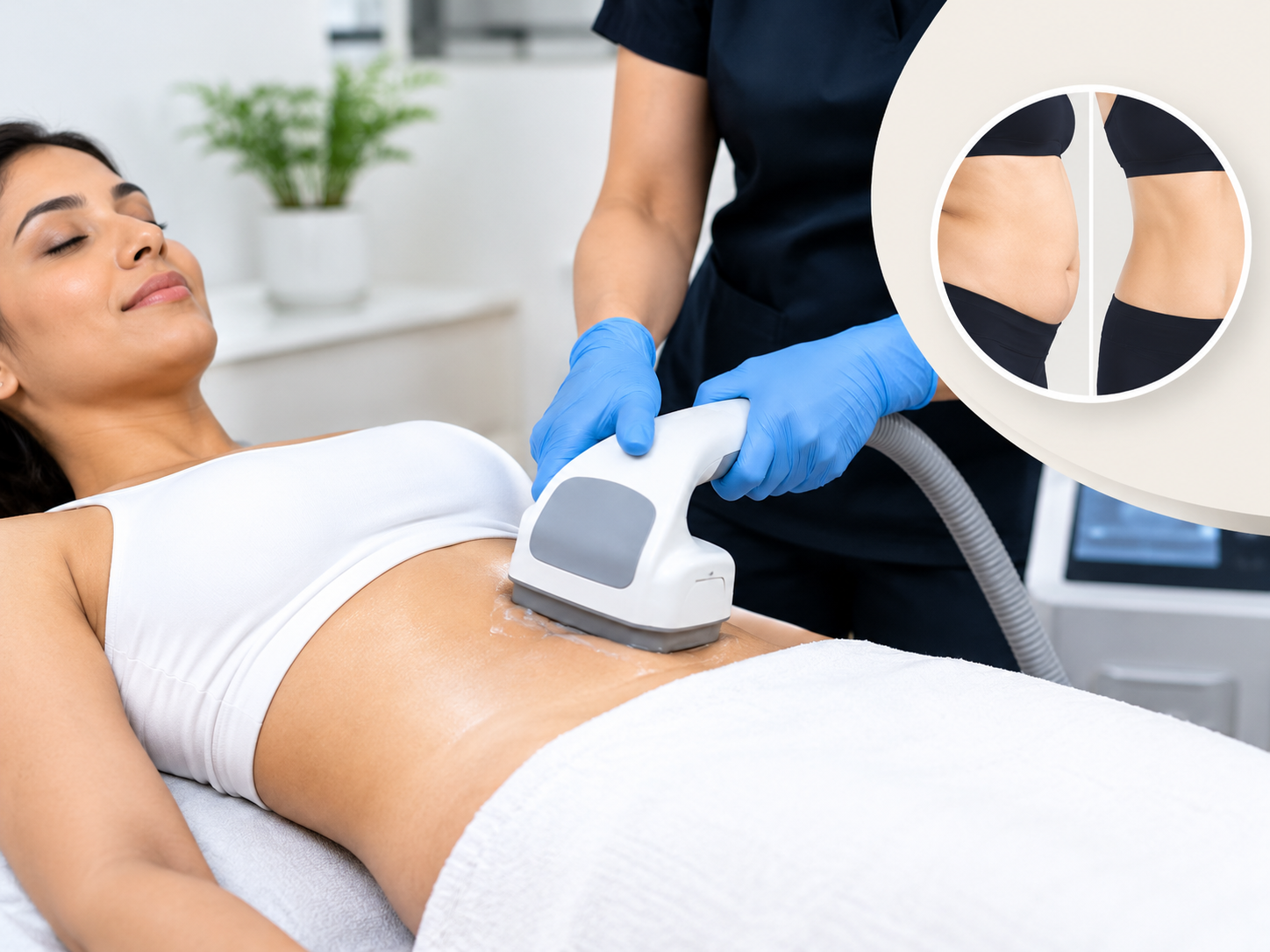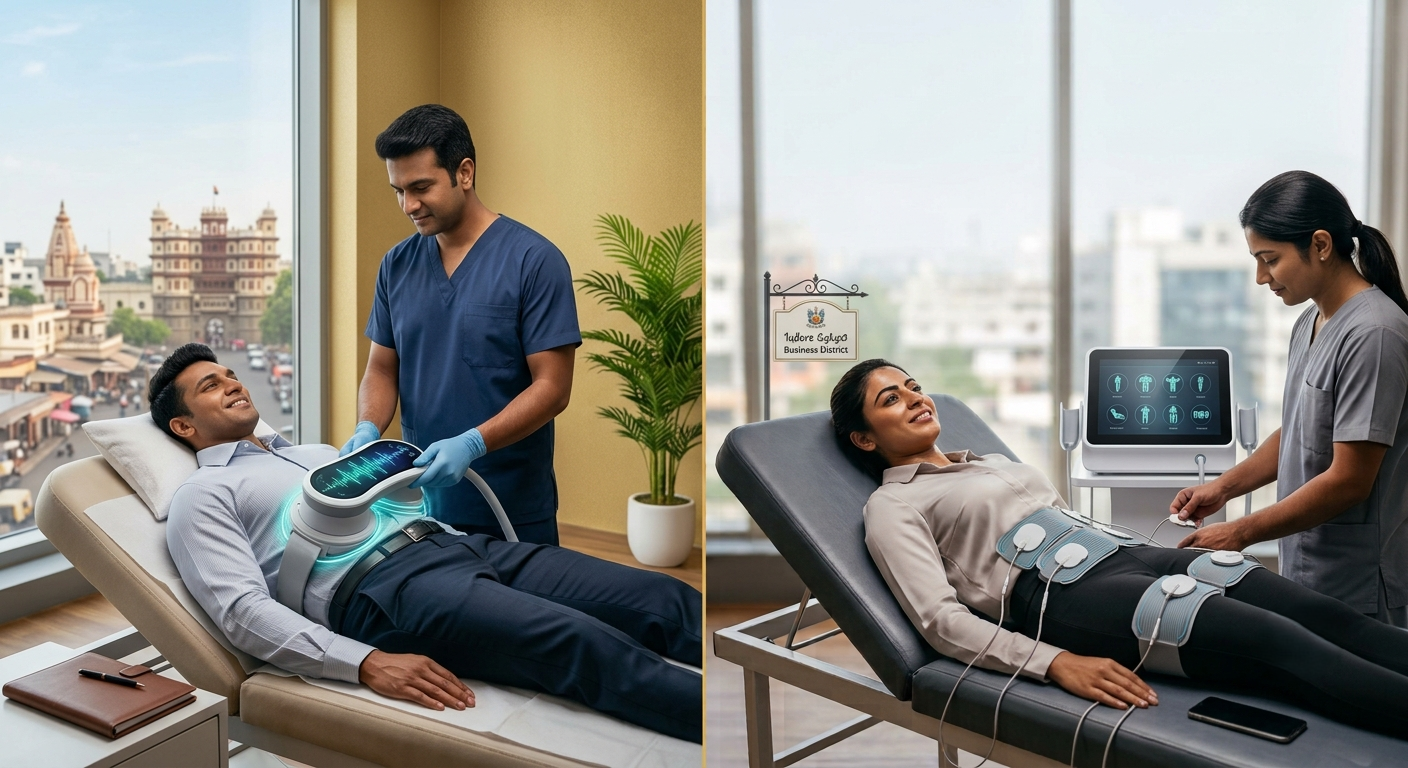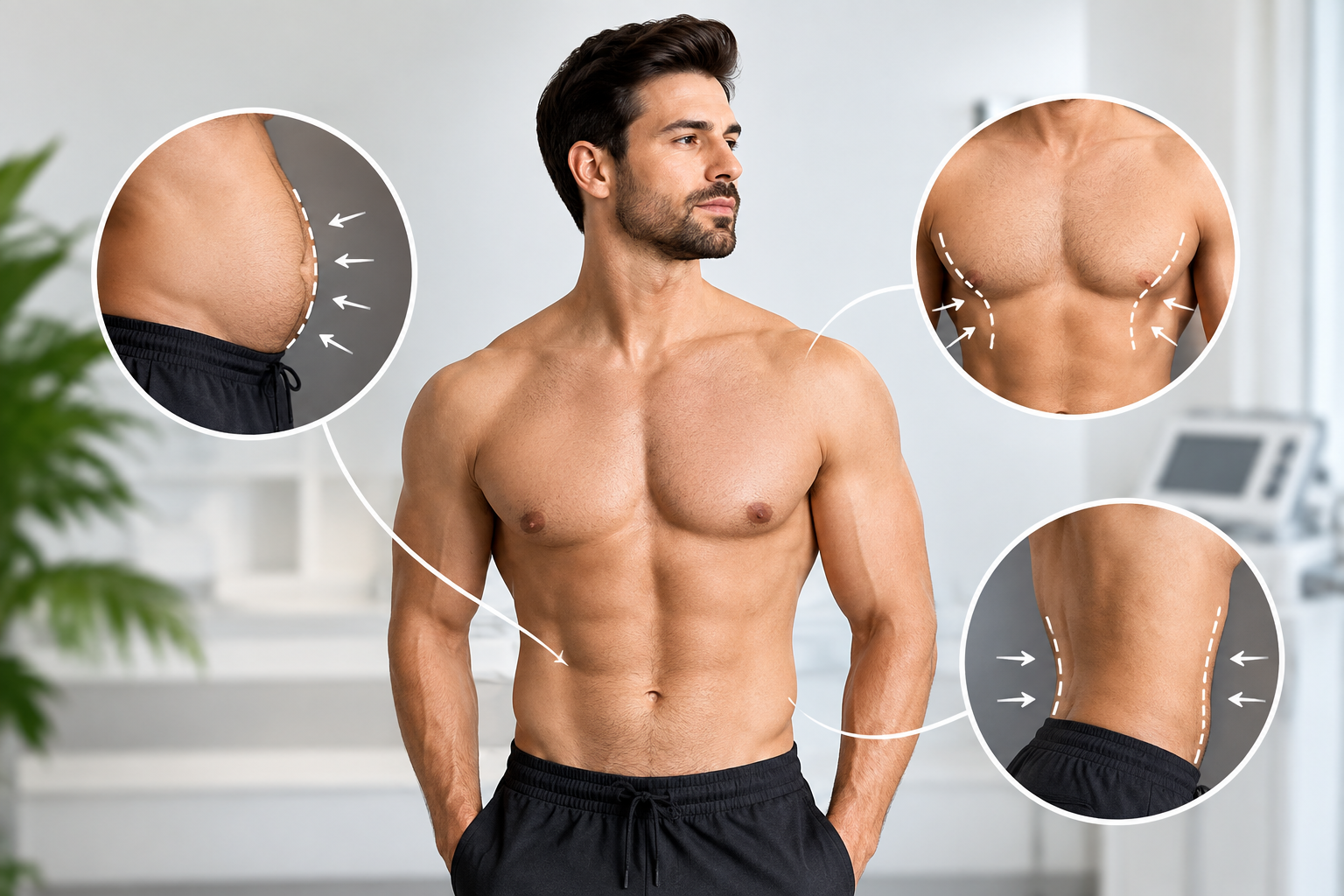
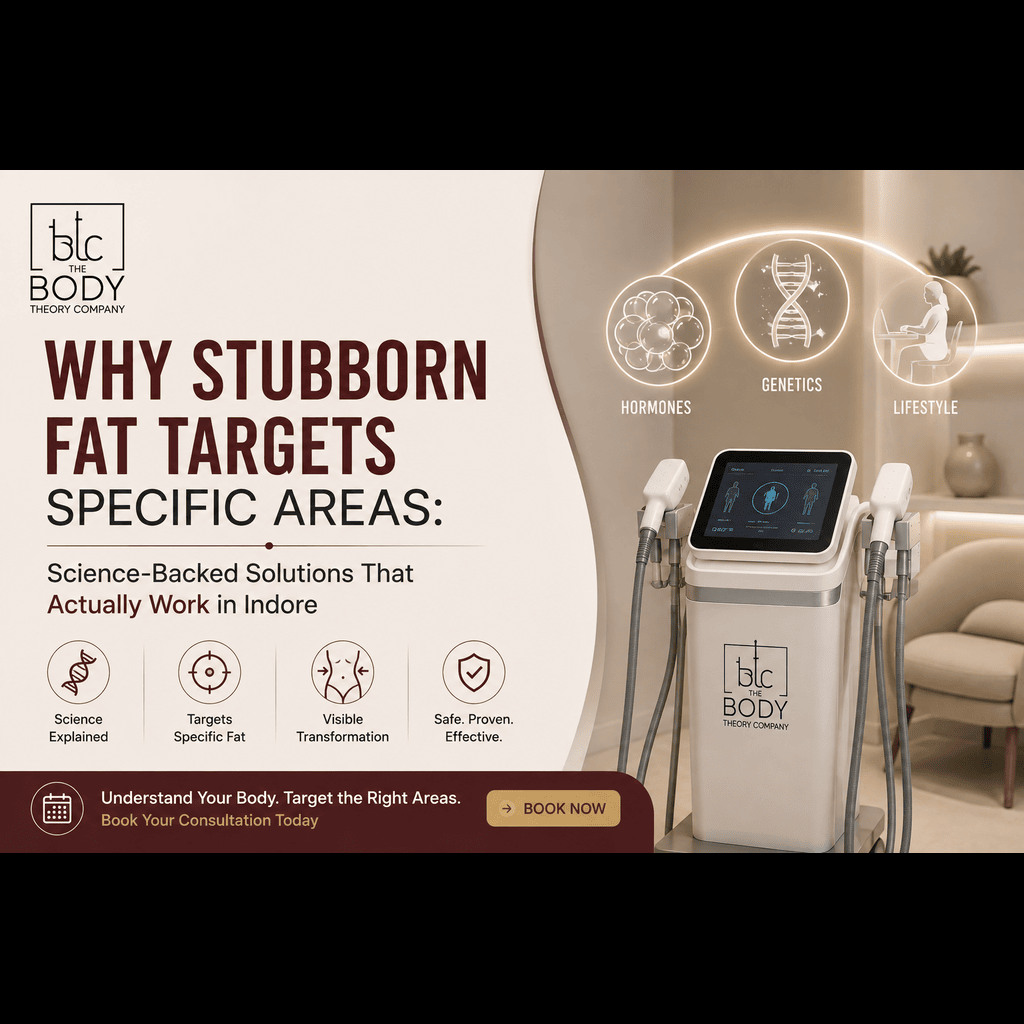
Fat collects unevenly on the body because different areas carry different concentrations of alpha and beta fat-storing receptors, and hormones like cortisol, insulin, and estrogen decide where that fat gets stored first and burned last. This is why the belly, thighs, and chin cling on even after months of clean eating and cardio, while other areas slim down without much resistance at all. Stubborn Fat Reduction in Indore through non-surgical treatments works because it goes straight to those fat cells, something no amount of willpower on a treadmill can do.
Here’s the part nobody tells you at the gym: if you’ve cut sugar, hit your step count, and still see the same stubborn pouch staring back at you in the mirror, you haven’t failed. Your fat cells have simply been playing by a different rulebook the whole time. Once you understand that rulebook, the frustration makes a lot more sense, and so does the fix.
Why Does the Body Store Fat in Certain Areas First?
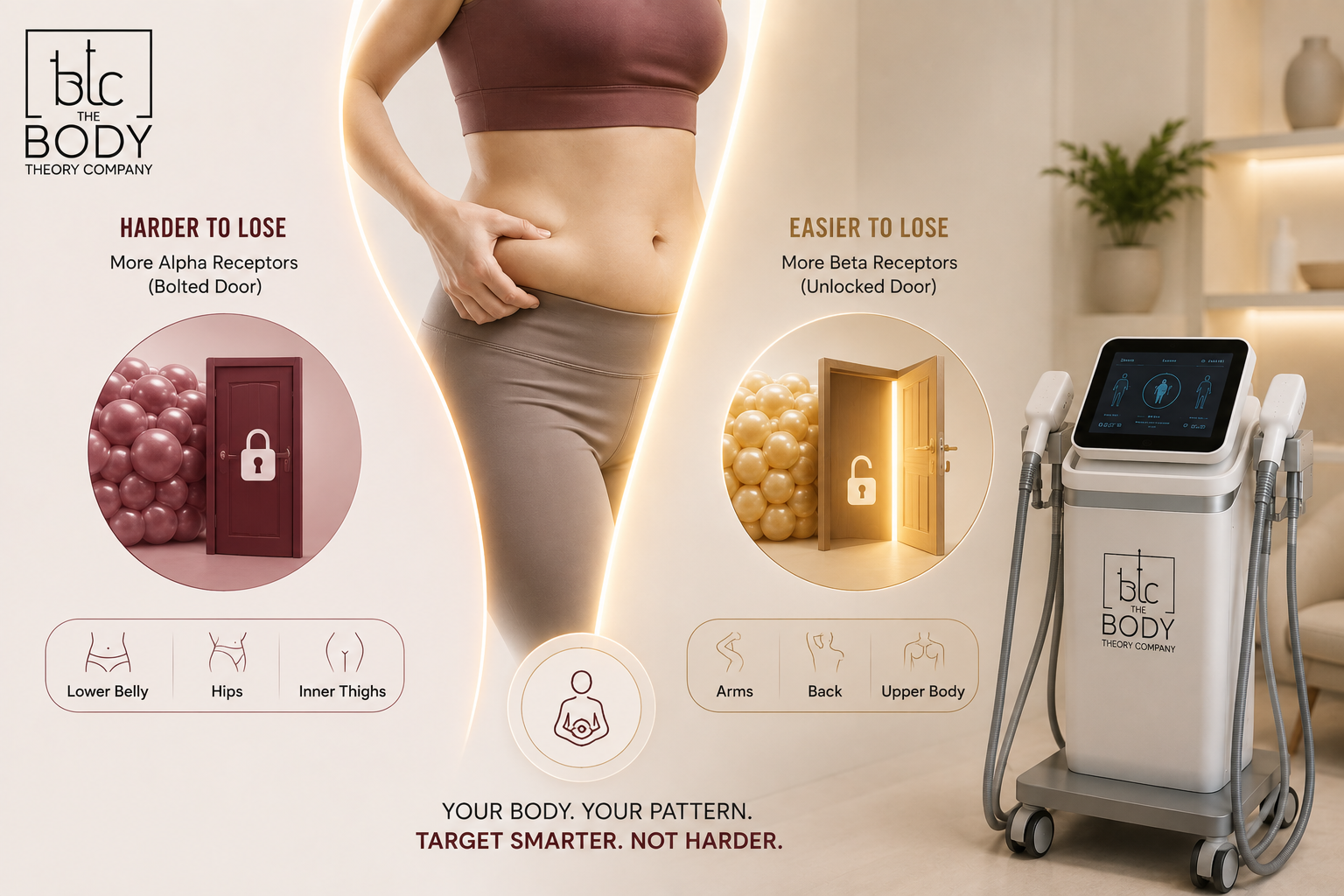
The body stores fat unevenly because fat cells in different regions carry different ratios of alpha-2 and beta-2 adrenergic receptors, and these receptors control how easily fat gets released for energy.
Think of beta receptors as an unlocked door and alpha receptors as a bolted one. Beta receptors respond quickly to hormonal signals and let fat go with relatively little resistance. Alpha receptors, on the other hand, hold the door shut. Fat cells packed with more alpha receptors, commonly found in the lower belly, hips, and inner thighs, simply don’t let go as easily. Genetics decide where you have more of these “bolted door” cells, which is exactly why two people on the same diet can lose fat from completely different areas first.
What Makes Belly Fat Especially Stubborn?
Belly fat is stubborn because it combines visceral fat around the organs with a dense layer of subcutaneous fat that’s packed with alpha receptors resistant to breakdown.
There’s also a hormone working quietly against you here: cortisol. Poor sleep, chronic stress, and irregular meals all keep cortisol elevated, and elevated cortisol tells your body to store fat specifically around the midsection, almost like it’s guarding your organs on purpose. This is exactly why a Belly Fat Removal Treatment in Indore becomes necessary for so many people who already eat well and train consistently. The treatment breaks fat cells down mechanically, sidestepping the hormonal resistance that diet alone simply can’t out-argue.
Why Do Diet and Exercise Fail on These Areas?
Diet and exercise burn fat systemically, pulling energy from whichever fat cells release it most easily, not from the specific area you’re staring at in the mirror.
Doctors call this the “spot reduction myth” for a reason. A hundred crunches a day will absolutely strengthen your core, but your body isn’t taking orders from your ab workout when it decides which fat cells to burn first. It’s working off receptor density and hormone signals, a system you can’t out-crunch or out-diet. That single gap, between what you’re doing and what your body is actually listening to, is exactly where non-surgical body contouring steps in.
Which Non-Surgical Treatments Actually Reduce Stubborn Fat?
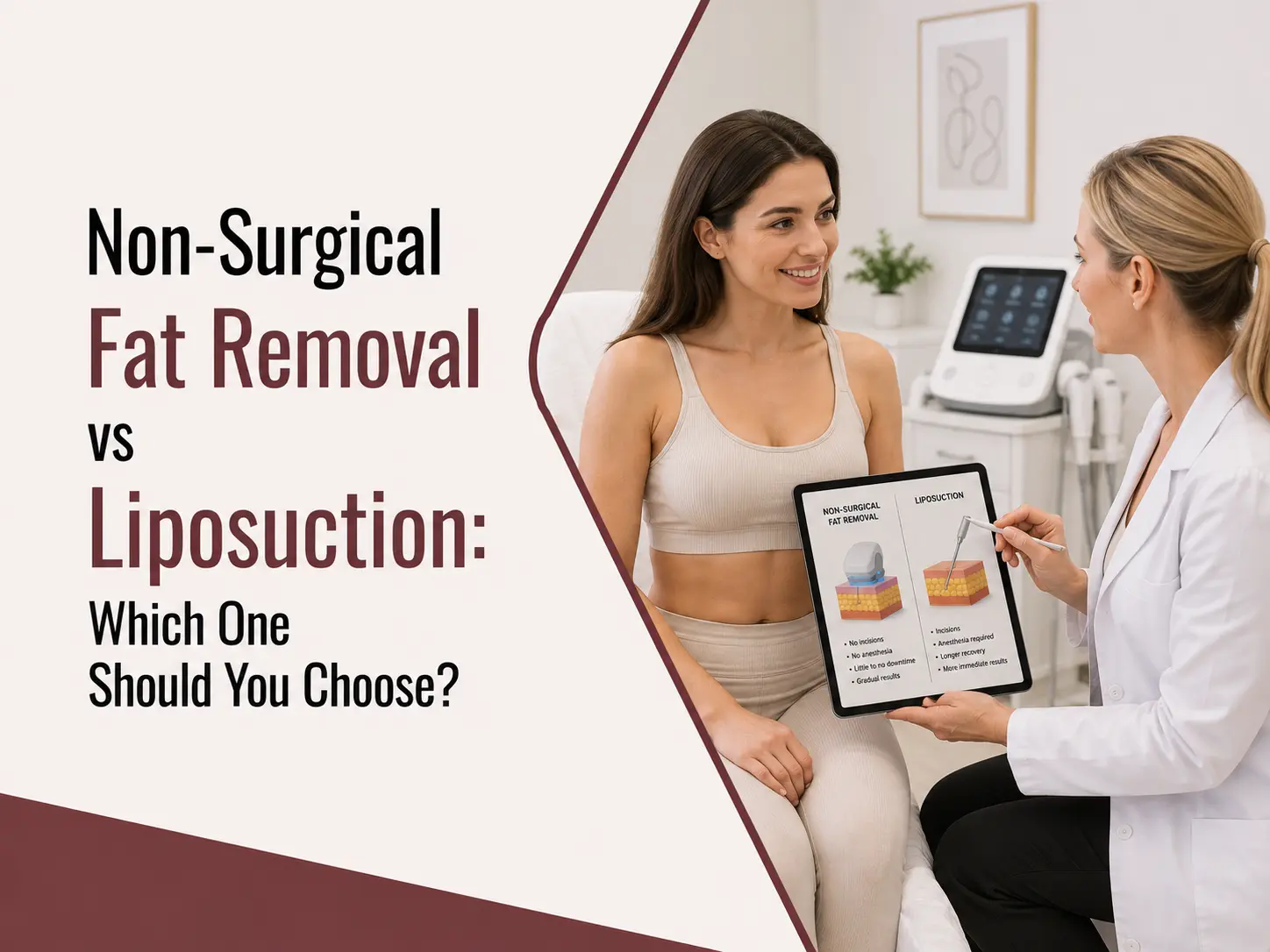
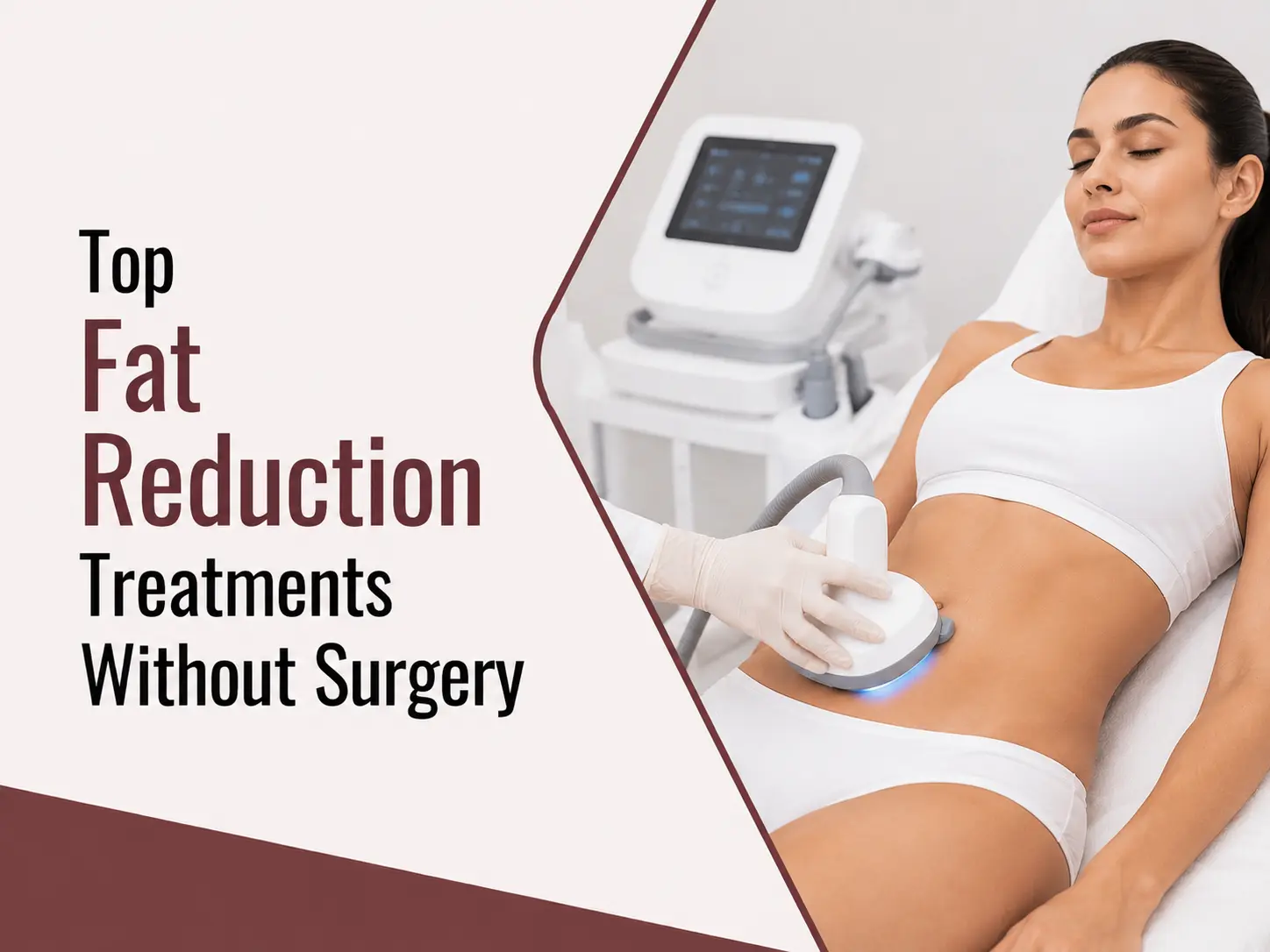
The most clinically supported non-surgical options are cryolipolysis (fat freezing), ultrasound lipolysis, and HIFU, and each one works through a completely different mechanism to damage and permanently eliminate fat cells in a targeted zone.
| Treatment | How It Works | Best For | Typical Sessions |
| Cryolipolysis | Controlled cooling triggers fat cell apoptosis (cell death) | Belly, flanks, thighs, arms | 1–3 per area |
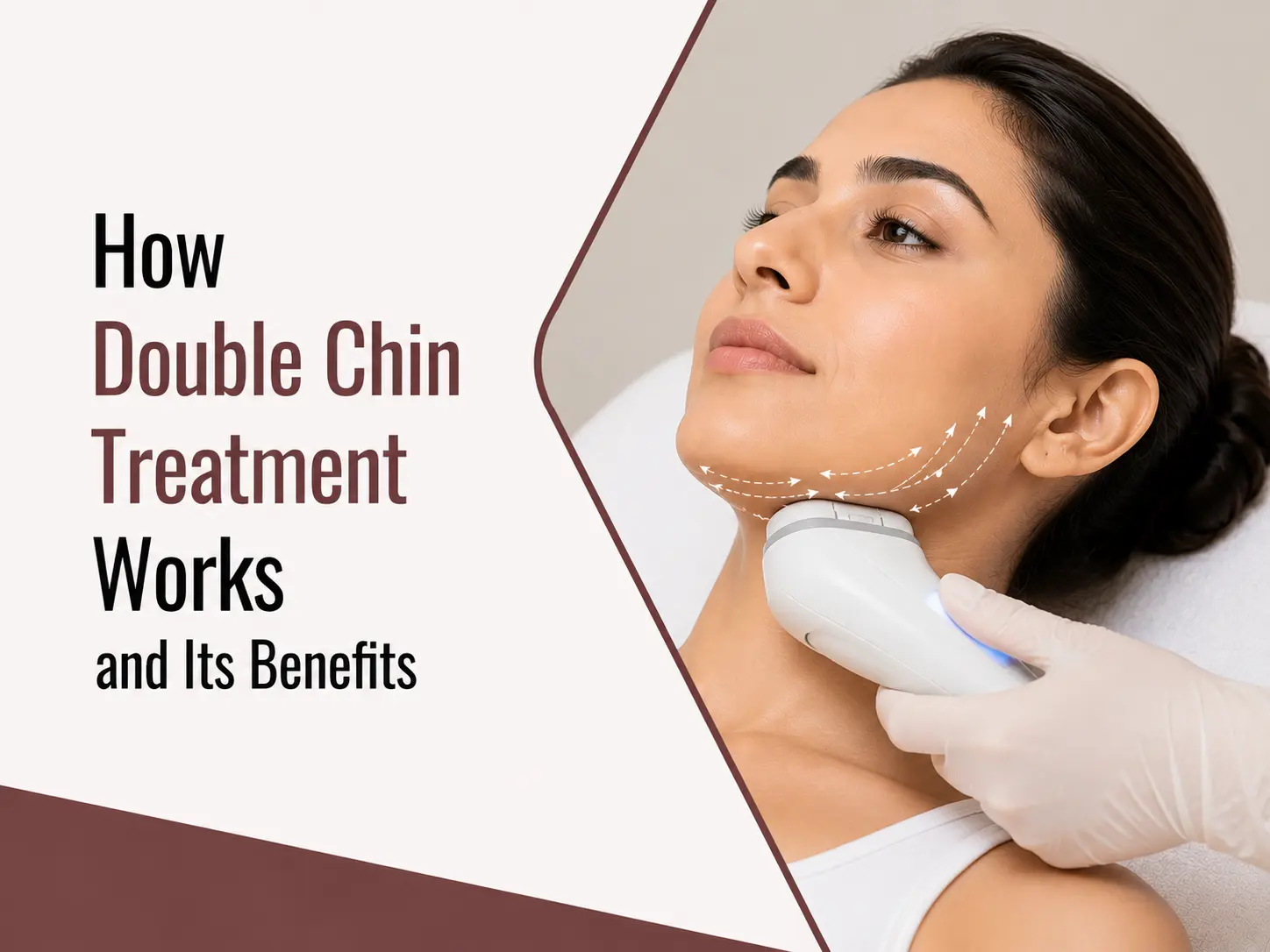
| Ultrasound Lipolysis | Low-frequency ultrasound waves break down fat cell membranes | Belly, double chin, cellulite-prone areas | 4–6 sessions |
| Body HIFU | High-intensity focused ultrasound heats deep fat layers | Deeper fat, skin tightening combo | 1–2 per area |
| Radio Frequency (RF) | Heats dermis to tighten skin around treated fat | Post-fat-loss skin laxity | 4–6 sessions |
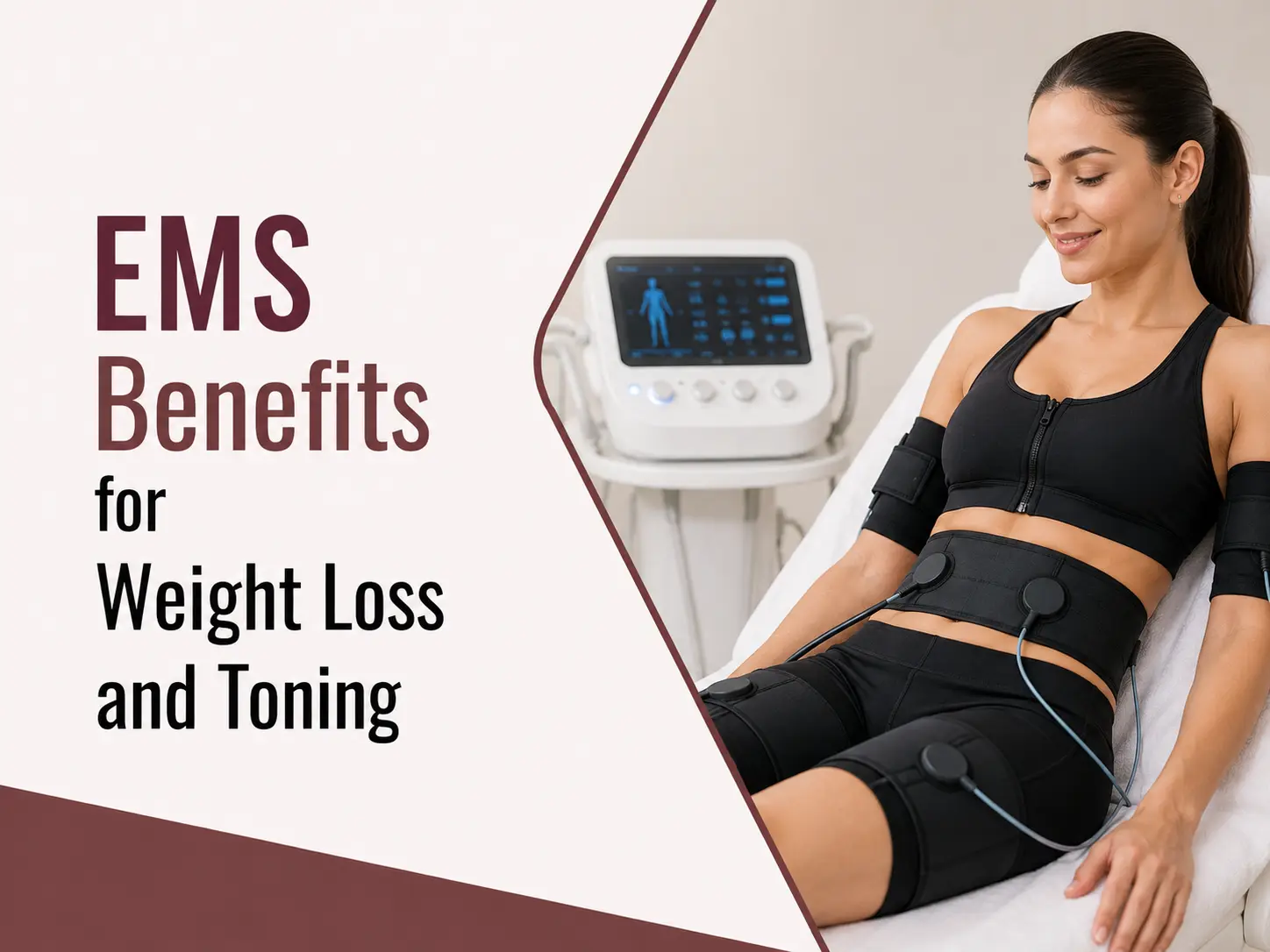
| Electronic Muscle Stimulation (EMS) | Electrical impulses contract muscle fibers | Muscle toning alongside fat treatments | 6–8 sessions |
How Do You Choose the Right Body Contouring Clinic in Indore?
Choosing the right Body Contouring Clinic in Indore comes down to three things: the technology being used, whether it’s cleared by a recognized safety authority, and how experienced the team is at actually performing the treatment, not just selling it.
- Confirm the clinic uses FDA-approved or internationally certified devices, not unregulated or grey-market machines.
- Ask how many years the practitioners have been performing the specific treatment you’re considering.
- Request before-and-after photos of clients with a body type similar to yours, not just their best-case results.
- Check whether the clinic offers a genuine one-on-one consultation before recommending a plan, instead of pushing a fixed package on day one.
- Look for transparent pricing with no surprise charges buried in follow-up sessions.
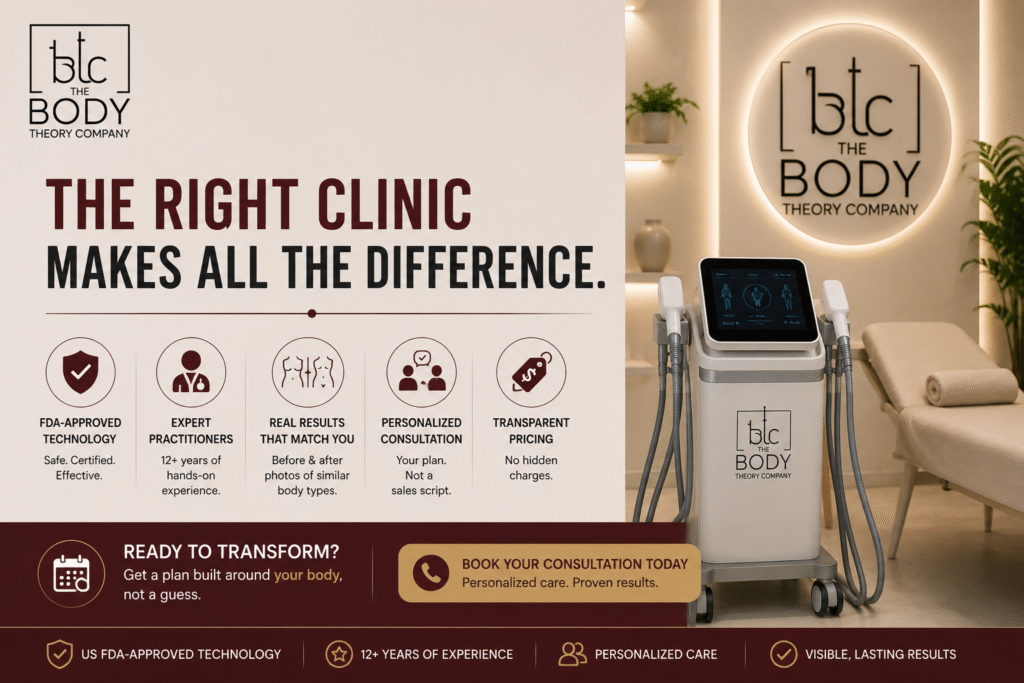
At The Body Theory Company, every treatment runs on US FDA-approved technology, delivered by a team with 12+ years of hands-on experience, and every plan starts with a real consultation, not a sales script. If you’re still weighing which technology actually fits your body type, this breakdown of the best non-surgical treatments for each body area walks through belly, arm, thigh, and chin options in more detail.
Is Body Contouring Only About Losing Fat?
No, body contouring is about reshaping specific, stubborn areas, not overall weight loss, and it works best for people who are already close to their target weight but have one or two pockets that just won’t cooperate.
- It removes fat cells permanently from the treated zone, unlike diet-based loss where cells simply shrink and can refill later.
- It doesn’t replace a healthy lifestyle; results hold best when paired with stable weight and regular movement.
- It isn’t designed for people with a high overall body fat percentage looking for major weight loss.
- Results typically become visible over 4 to 12 weeks as the body naturally clears out the damaged fat cells.
Frequently Asked Questions
1. Why does my belly stay fat even though I’ve lost weight everywhere else?
This happens because belly fat cells often carry more alpha-2 receptors, which resist releasing fat compared to receptors elsewhere in the body. Stress-related cortisol also directs the body to store fat preferentially around the midsection. Targeted, non-surgical fat reduction treatments work directly on these fat cells instead of relying on total-body calorie deficit.
2. How much does stubborn fat reduction cost in Indore?
Costs vary depending on the treatment type, the size of the area, and the number of sessions needed, and clinics typically quote a price only after an in-person consultation and body assessment. Cryolipolysis and ultrasound lipolysis are generally priced per treated zone. It’s best to get a personalized quote rather than relying on a generic online price range.
3. Is non-surgical fat reduction safe for everyone?
Non-surgical fat reduction is considered safe and non-invasive when performed with FDA-approved equipment by trained professionals, and it doesn’t damage skin, nerves, or surrounding tissue. It’s not recommended during pregnancy or for people with certain cold-sensitivity conditions like cryoglobulinemia. A consultation helps confirm whether you’re a suitable candidate.
4. How many sessions do I need to see visible results?
Most people see visible results after 4 to 6 sessions, though cryolipolysis and HIFU sometimes show noticeable change after just 1 to 3 sessions per area. The exact number depends on the treatment area, your starting fat thickness, and your body’s individual response. Results typically build gradually over 4 to 12 weeks per session.
5. Can stubborn fat come back after treatment?
The fat cells destroyed during treatments like cryolipolysis or ultrasound lipolysis do not return, since they’re permanently eliminated from the body. However, remaining fat cells in the body can still expand if you gain significant weight afterward. Maintaining a stable weight through diet and activity helps preserve results long-term.
6. What’s the difference between belly fat removal treatment and general weight loss programs?
Belly fat removal treatment targets fat cells in a specific zone using cooling, ultrasound, or focused heat, while general weight loss reduces fat proportionally across the whole body. Weight loss programs won’t necessarily touch a stubborn pocket that resists diet and exercise. A targeted treatment is designed specifically to address that resistant area.
7. Does exercise become useless once you’ve had body contouring done?
No, exercise remains important after body contouring because it helps maintain your results and keeps the fat cells elsewhere in the body from expanding. Muscle tone from regular activity also improves how the treated area looks over time. Think of body contouring as clearing a stubborn roadblock, not as a replacement for the road itself.
Book Your Consultation
Stubborn fat around the belly, thighs, or chin was never a discipline problem; it’s a biology problem, and biology responds to targeted treatment in a way no diet plan ever will. If you’re ready to finally understand which option fits your body instead of guessing, book a personal consultation with The Body Theory Company in Indore and walk out with a treatment plan built around your specific fat zones, not a generic package.