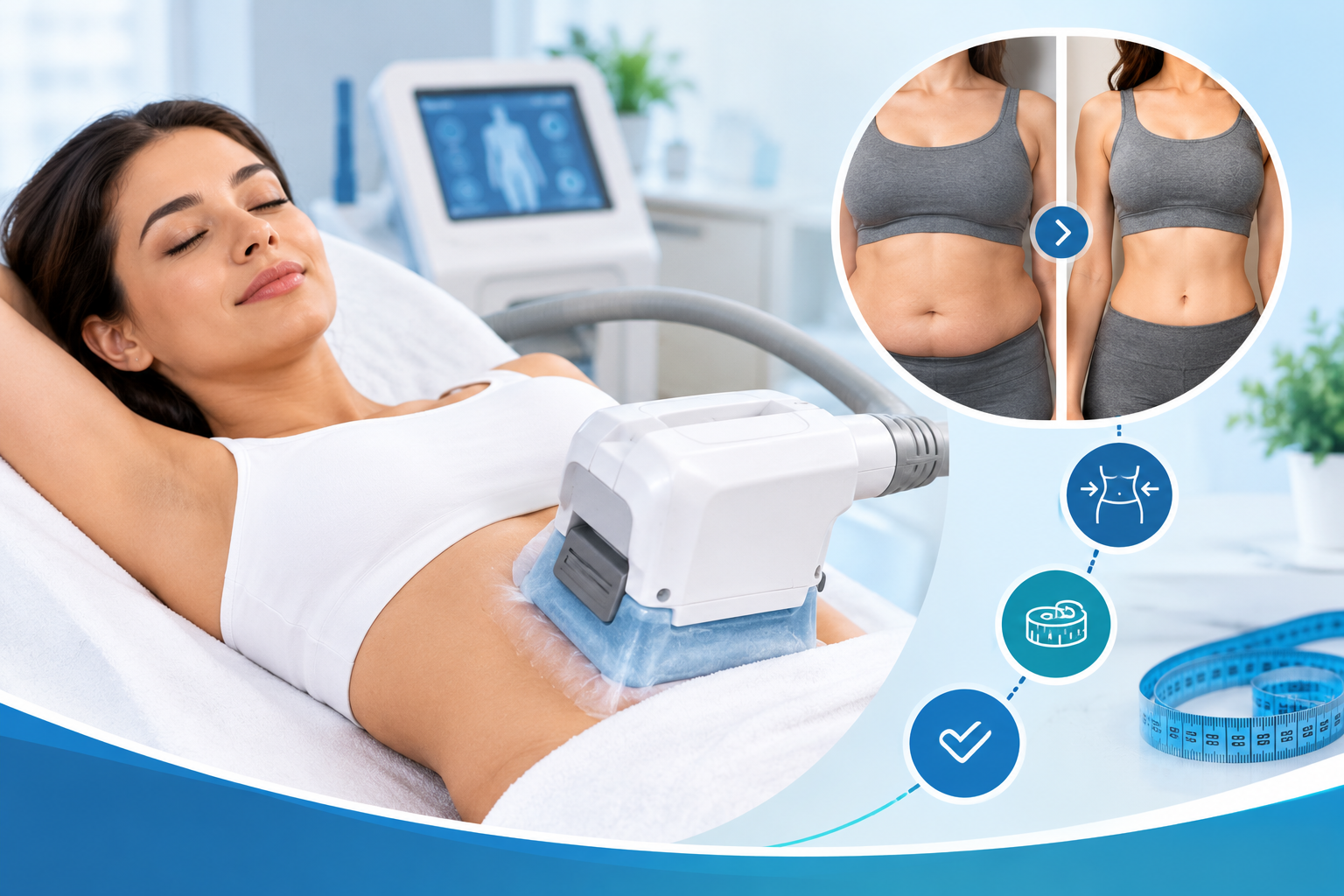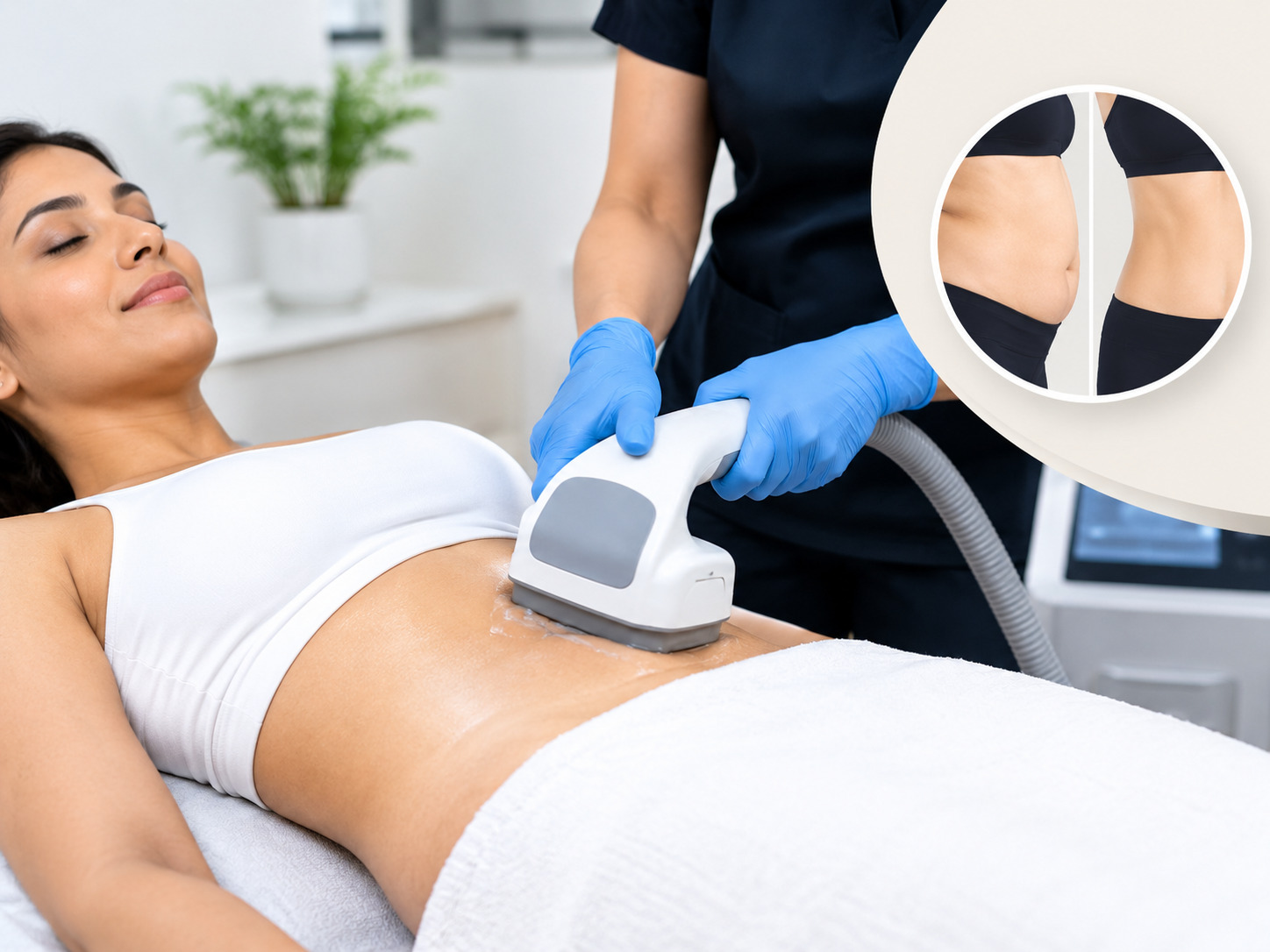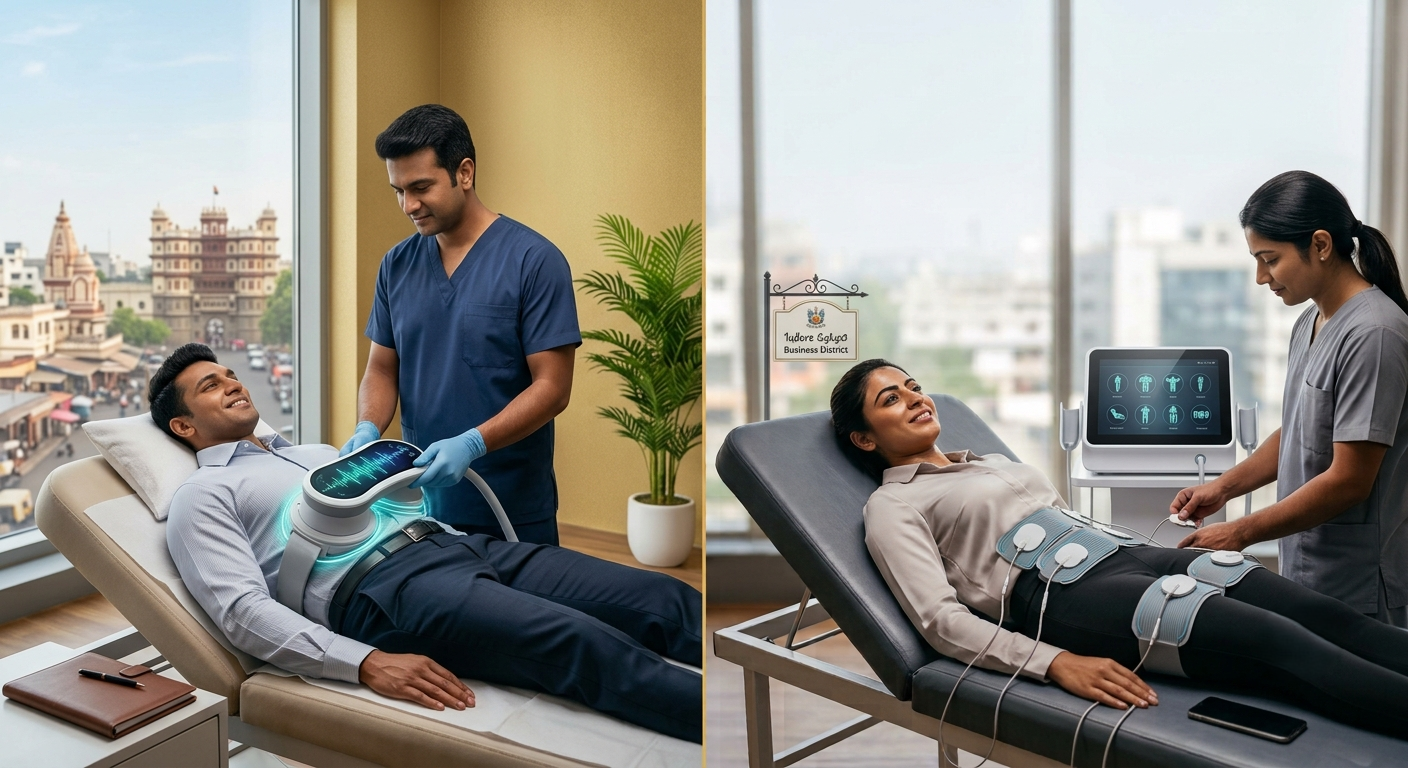
Non-surgical treatment can target subcutaneous belly fat, the soft layer under your skin that you can pinch, but it cannot reach visceral fat, which sits deep around your organs. That is why Stubborn Fat Reduction in Indore through cryolipolysis, HIFU, and similar options reshapes the surface of the belly without treating deep belly fat. Visceral fat responds to lifestyle changes and medical care instead.
So if your belly is round and firm and barely pinches, the problem may be a different kind of fat altogether. Here’s how to tell, and what actually works for each type.
What Is the Difference Between Visceral and Subcutaneous Belly Fat?
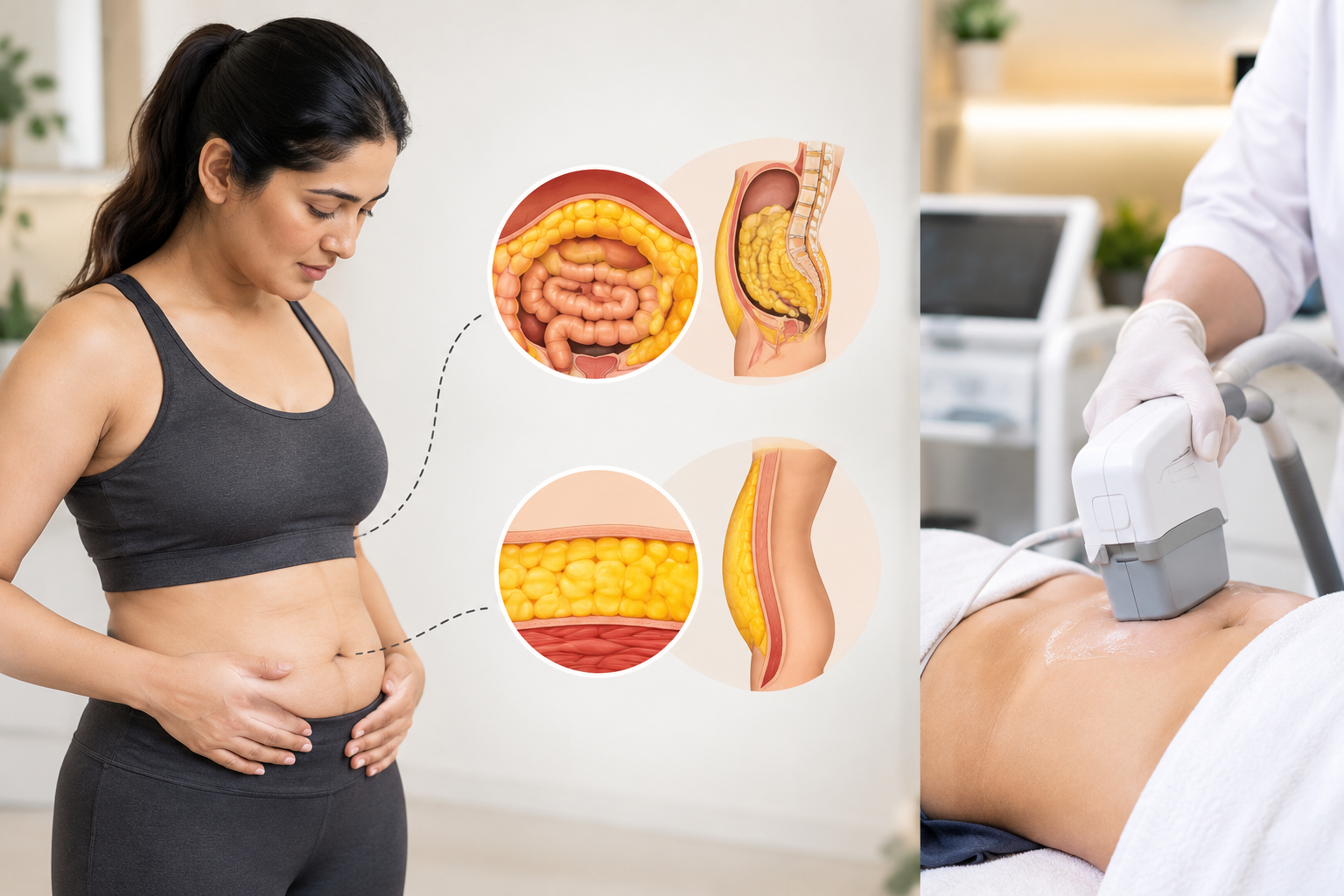
Subcutaneous fat sits just under your skin and can be pinched, while visceral fat lies deeper, around organs like the liver and intestines. Both add to belly size, but they behave very differently.
| Subcutaneous Fat | Visceral Fat | |
| Location | Under the skin | Deep in the abdomen, around organs |
| Feels like | Soft and pinchable | Firm, with a hard, round belly |
| Health risk | Lower | Higher |
| Can non-surgical treatment target it? | Yes | No |
Physicians at Aurora Health Care describe the pinch test the same way: subcutaneous fat can be pinched, visceral fat cannot. Visceral fat is also the more harmful type, which is why knowing which one you carry matters more than the size of your belly.
How Can You Tell Which Type You Have?
A pinch test and a tape measure give a rough idea, but only a scan can measure visceral fat exactly.
- Pinch test: a thick, soft fold usually means mostly subcutaneous fat.
- Hard, round belly: a firm belly that pinches very little points more toward visceral fat.
- Waist size: the International Diabetes Federation flags 90 cm or more for South Asian men and 80 cm or more for women as higher risk.
- Scans: CT, MRI, or DEXA-type body scans can estimate visceral fat. Weighing scales and skin calipers cannot see it.
Waist size alone can miss the problem. In a CT study of Asian Indian adults, people with a normal waist size but conditions like diabetes, high blood pressure, or high cholesterol had more visceral fat than healthy controls.
Can Non-Surgical Treatment Remove Visceral Fat?
No. Treatments like cryolipolysis and HIFU work from outside the body on the fat layer beneath the skin, so they cannot reach the deep fat around your organs.
A small split-body trial indexed on PubMed Central looked at visceral fat after cryolipolysis and described only a possible trend, with no significant change in waist size or body fat percentage. One small study is not proof, so treat any promise to remove visceral fat with caution.
What Can Non-Surgical Treatment Do for Your Belly?
It can reduce the pinchable fat layer and improve how your belly looks, and it works best on people already close to their goal weight.
- Cryolipolysis freezes fat cells in the subcutaneous layer so the body clears them over the following weeks.
- HIFU uses focused ultrasound to reach deeper layers of that fat, and it also helps tighten skin.
- Ultrasound lipolysis breaks down fat cell walls across a short course of sessions.
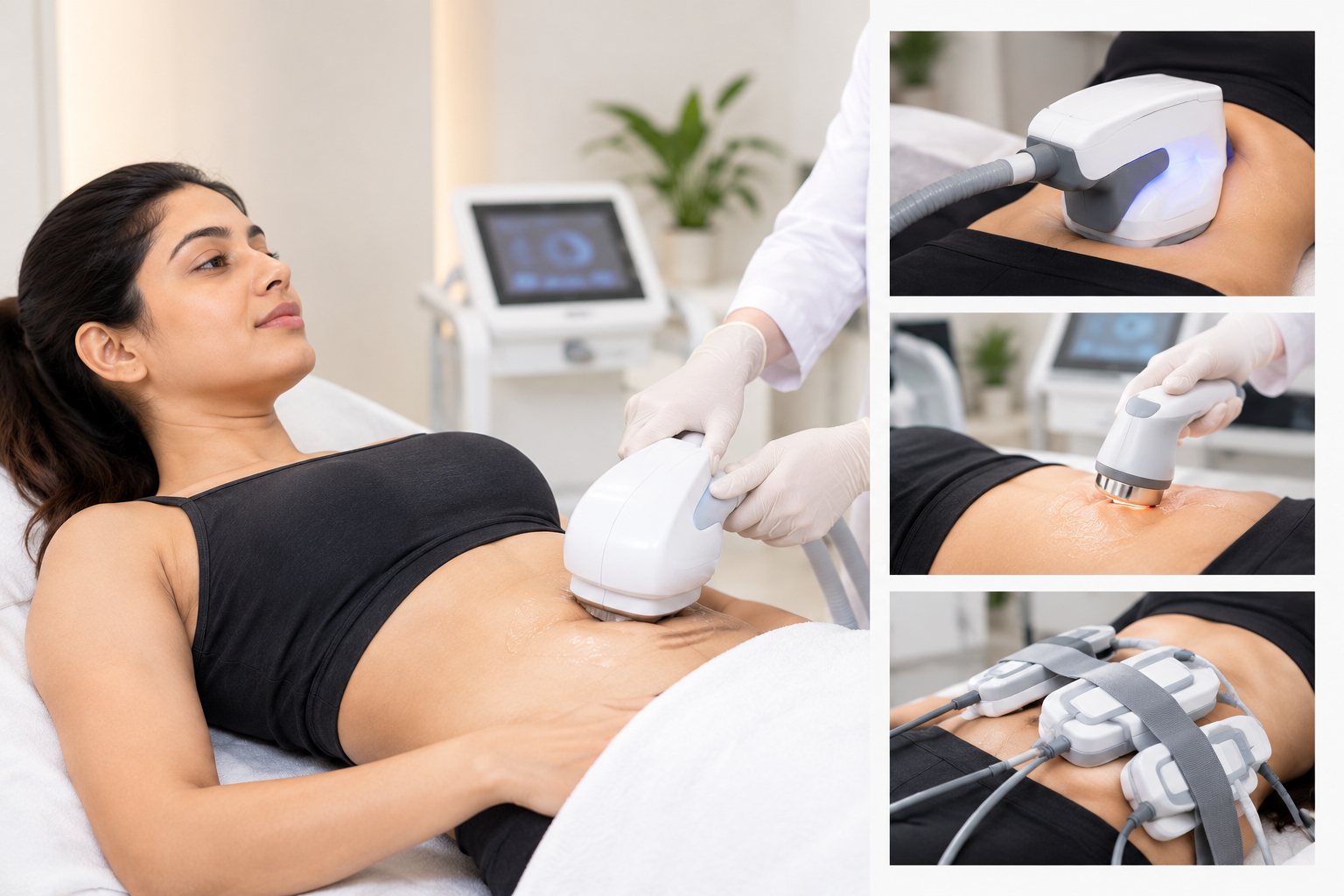
Cryolipolysis for belly fat in Indore is our most requested option for a defined, pinchable bulge. Most people notice early change within three to four weeks, with fuller results by eight to twelve weeks. For costs, sessions, and a side-by-side of the options, see our full guide to non-surgical belly fat treatment.
Not sure which belly fat you’re carrying? Get a Free Body Assessment →
What Actually Reduces Visceral Fat?
Visceral fat responds best to everyday habits done consistently, with medical support when needed.
- Regular activity, such as brisk walking plus some strength training.
- Fewer sugary drinks and less refined carbohydrate.
- Seven to eight hours of sleep a night.
- Lower stress, since high cortisol encourages belly fat storage.
- Blood sugar, cholesterol, and blood pressure checks with your doctor, especially if your waist is above the numbers listed earlier.
A good body contouring clinic in Indore will tell you this upfront instead of selling sessions for a problem the machines can’t reach. At The Body Theory Company, every plan starts with a one-on-one consultation that looks at your body type, goals, and medical history, so you know which fat you’re treating before you spend anything.
Why Do Love Handles Respond Better Than a Hard Belly?
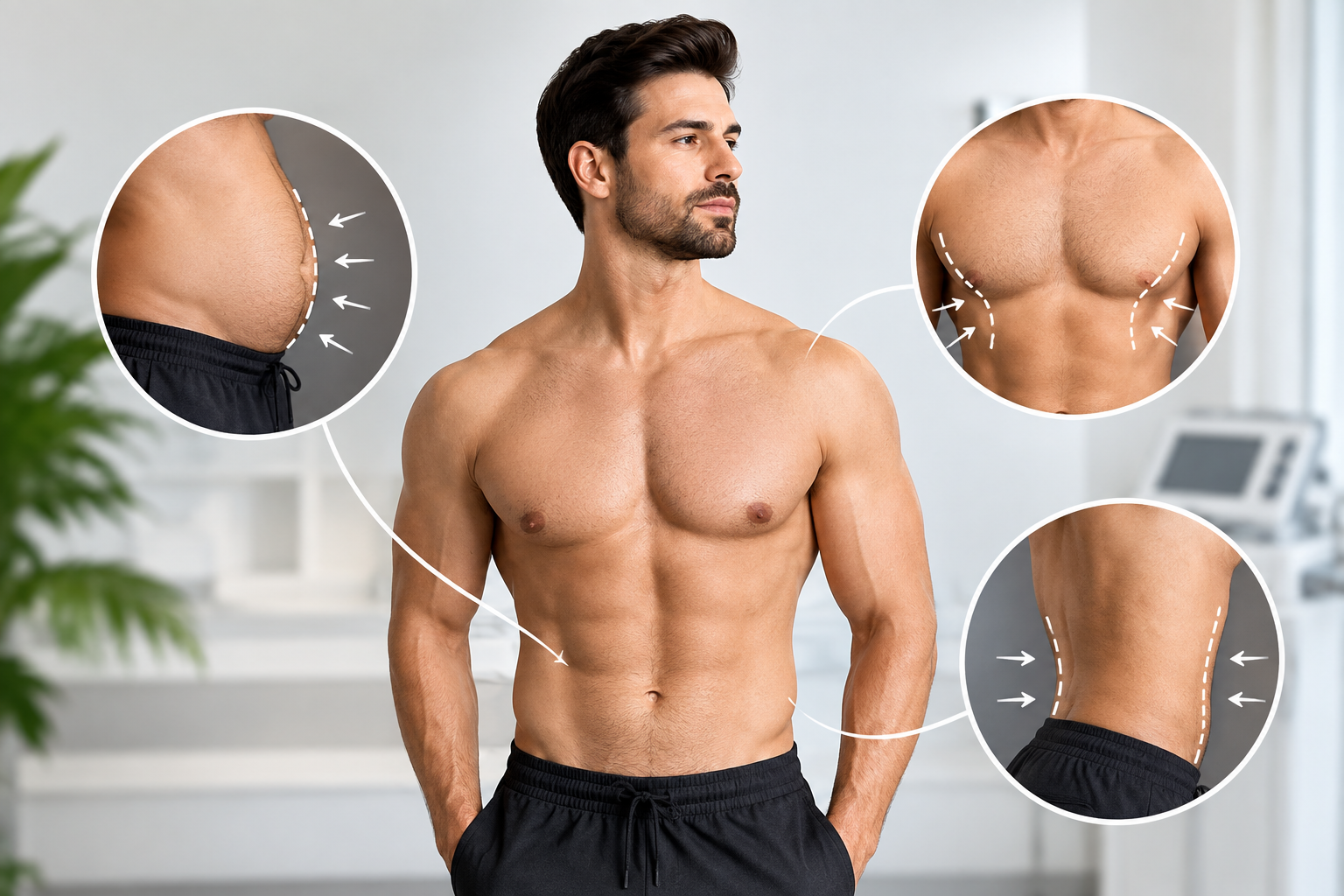
Love handles respond well because they sit in the subcutaneous layer, which is exactly what non-surgical treatment can reach.
That makes Love Handles Treatment in Indore a common and well-suited use of cryolipolysis and HIFU, while a hard, round belly may need lifestyle change first. Once visceral fat is under control, body contouring can refine what’s left, and the pinchable pockets that remain are the ones treatment handles best.
Frequently Asked Questions
1. Can cryolipolysis remove visceral fat?
No. Cryolipolysis works on the fat layer under the skin and cannot reach the deep fat around your organs. Visceral fat is best reduced through exercise, diet, sleep, and medical guidance.
2. How do I know if I have visceral or subcutaneous belly fat?
A fat fold you can pinch is subcutaneous, while a firm, round belly that barely pinches suggests visceral fat. Only a CT, MRI, or DEXA-type scan can measure visceral fat accurately. A doctor can advise which test suits you.
3. Is visceral fat more dangerous than subcutaneous fat?
Yes. Visceral fat is considered the more harmful type because it sits around vital organs and is linked to a higher risk of conditions like diabetes and heart problems. Subcutaneous fat is generally lower risk.
4. What waist size is considered high risk for Indians?
The International Diabetes Federation flags 90 cm or more for South Asian men and 80 cm or more for women as higher risk. This is a rough screening tool, not a diagnosis, so speak to a doctor if you are above these numbers.
5. Does a hard belly always mean visceral fat?
Not always, but a hard, round belly that barely pinches points more often to visceral fat. Bloating and muscle tone can also play a part, so a doctor can confirm what is behind it.
6. Can I have body contouring if I have visceral fat?
Yes, if you also have a pinchable layer and are reasonably close to your goal weight, but treatment will not reduce the deep fat. Lifestyle changes and medical advice come first for visceral fat, with contouring used to refine what remains.
Book Your Consultation
Belly fat comes in two types, and only one responds to treatment. Book a consultation with The Body Theory Company in Indore and find out which one you’re dealing with, and what will actually work for it.